Liquefaction — A Silent Ground Failure Risk
When people think of earthquake damage, they often imagine collapsing buildings or cracked roads. However, one of the most dangerous and misunderstood hazards occurs beneath the surface—a phenomenon known as liquefaction. Unlike dramatic structural failures, liquefaction works quietly, weakening the ground itself and causing even well-designed buildings to fail.
What Is Liquefaction?
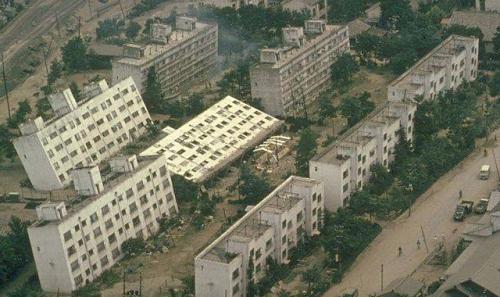
Liquefaction occurs when water-saturated, loose soil—typically sand or silt—loses its strength during intense ground shaking. As seismic waves pass through the soil, water pressure increases and soil particles lose contact with one another. For a short time, the ground behaves more like a liquid than a solid.
When this happens, the soil can no longer support buildings, roads, bridges, or buried utilities. Structures may sink, tilt, or slide even if they remain structurally intact.
Why Liquefaction Is So Dangerous
Liquefaction is especially dangerous because it often develops without obvious surface warning. While the shaking may last only seconds, the damage caused by weakened ground can be extensive and long-lasting.
- Buildings tilt or settle unevenly
- Foundations lose bearing capacity
- Underground pipes and cables rupture
- Roads and pavements crack or buckle
- Ports and waterfront structures fail
Where Liquefaction Is Most Likely
Liquefaction risk depends heavily on soil type and groundwater conditions. It is most likely to occur in areas with loose, sandy or silty soils and high groundwater levels. Reclaimed land, riverbanks, coastal zones, and deltas are particularly vulnerable.
Lessons From Past Earthquakes
Past earthquakes around the world have demonstrated that liquefaction can be just as destructive as building collapse. In several major events, structures remained standing but became unusable because the ground beneath them failed. Entire neighborhoods have been abandoned due to widespread settlement and ground deformation.
Reducing Liquefaction Risk
While liquefaction cannot be completely eliminated, engineers use various strategies to reduce its impact:
- Soil improvement and densification techniques
- Deep foundations extending to stable soil layers
- Groundwater control where feasible
- Detailed geotechnical site investigations
- Land-use planning that avoids high-risk zones
Conclusion
Liquefaction is a silent but powerful threat that undermines the very ground we build on. Earthquake safety is not only about strong structures, but also about understanding soil behavior. By identifying liquefaction-prone areas and applying proper engineering solutions, communities can greatly reduce damage and improve resilience during future earthquakes.